
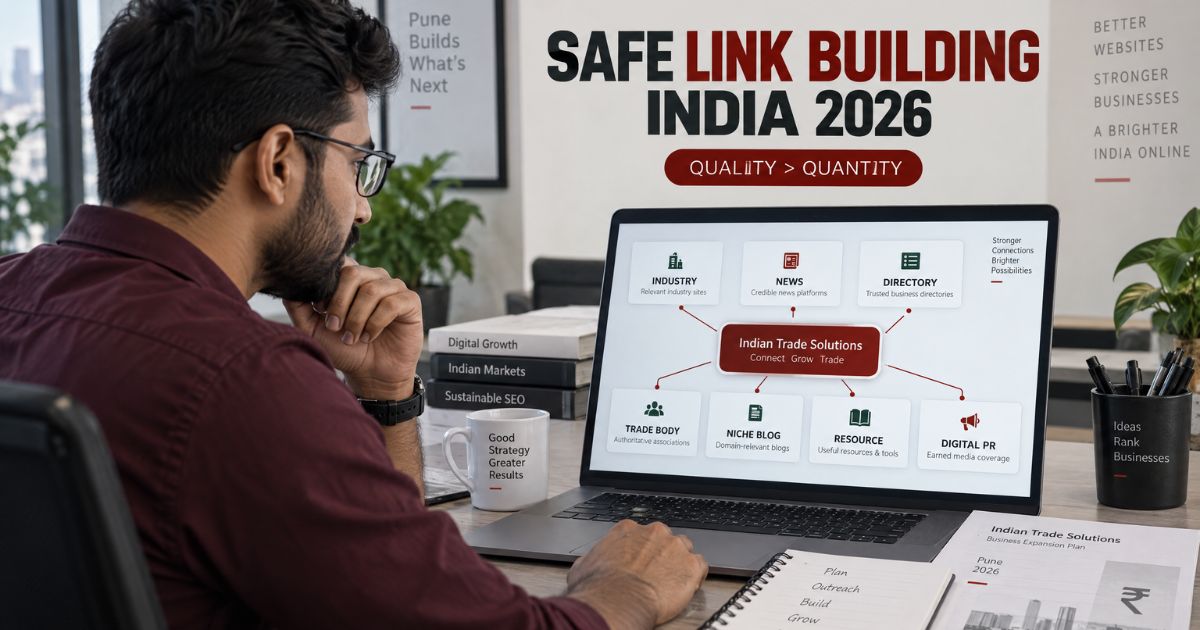
You write good content. You’ve done your keywords. But your site still sits on page three while weaker competitors rank above you. Frustrating, isn’t it? Nine times out of ten, the missing piece is links.
This link building India guide gives you a safe, realistic playbook — the kind that works here, in 2026, without risking a Google penalty. No spammy shortcuts. No buying 500 links for ₹999. Just what actually earns trust.
What is link building? Link building is the work of getting other trusted websites to link to yours. Each good link acts like a vote of trust that tells Google your site is worth ranking. The best backlinks come from real sites, press, and directories — never paid link farms.
We’ll keep it simple and India-first. Where to get links, how to ask, how many you need, and the mistakes that quietly kill rankings. Let’s get into it.
Why Backlinks Still Matter
Some people say links are dead. They’re wrong. Google still treats a link from a trusted site as a strong signal that your content is worth showing. Think of each one as a recommendation.
But here’s the thing — quality beats quantity, every time. One link from a respected Indian news site or industry body is worth more than 200 links from random spam directories. In fact, those 200 can actively hurt you.
Would you trust a shop because 500 strangers were paid to praise it? Google feels the same. It wants real votes from real sites. That’s the whole game.
Good Links vs Bad Links
Before you chase links, learn the difference. This one section can save you from a painful penalty.
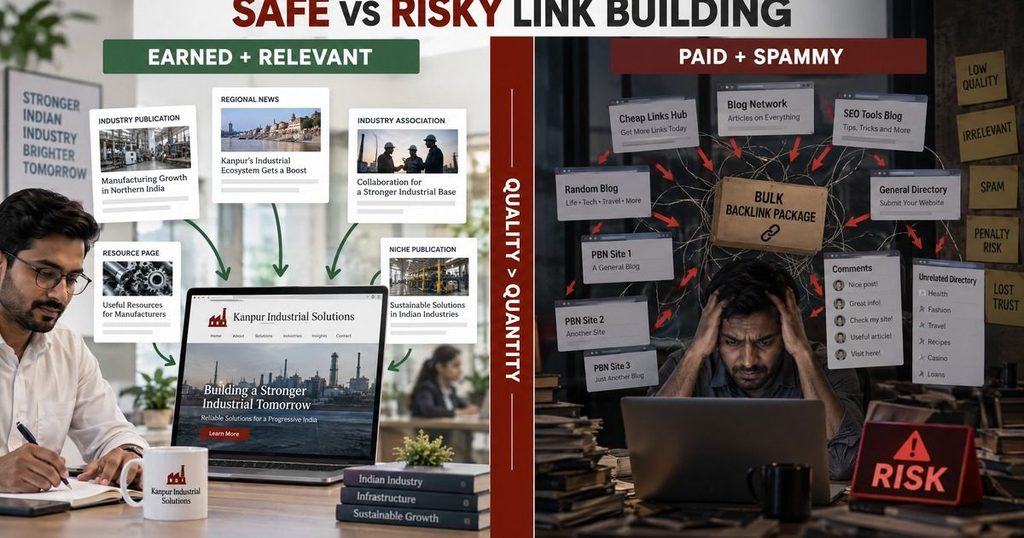
Links Google rewards
- From sites related to your industry or city.
- Placed inside real, useful content — not a footer or sidebar farm.
- With natural anchor text (your brand or a normal phrase), not “best SEO company in India” every time.
- Earned because your content, tool, or story deserved it.
Links that get you penalised
- Bought in bulk — “100 backlinks for ₹499” packages.
- Private Blog Networks (PBNs): fake sites built only to link out.
- Mass comment and forum spam with your link pasted everywhere.
- Large-scale link exchanges (“you link me, I link you”).
An honest warning: paid links and PBNs can work for a few months. Then one Google update wipes out your rankings overnight, and recovery takes far longer than the shortcut ever saved. We’ve seen it happen to sites spending lakhs. Not worth it.
If you’re not sure whether your current links are safe, that’s something SEO services can check for you with a quick backlink audit.
India-Specific Link Sources That Actually Work
Most guides list American blogs you’ll never get into. Here are real categories that work for Indian websites — with examples.
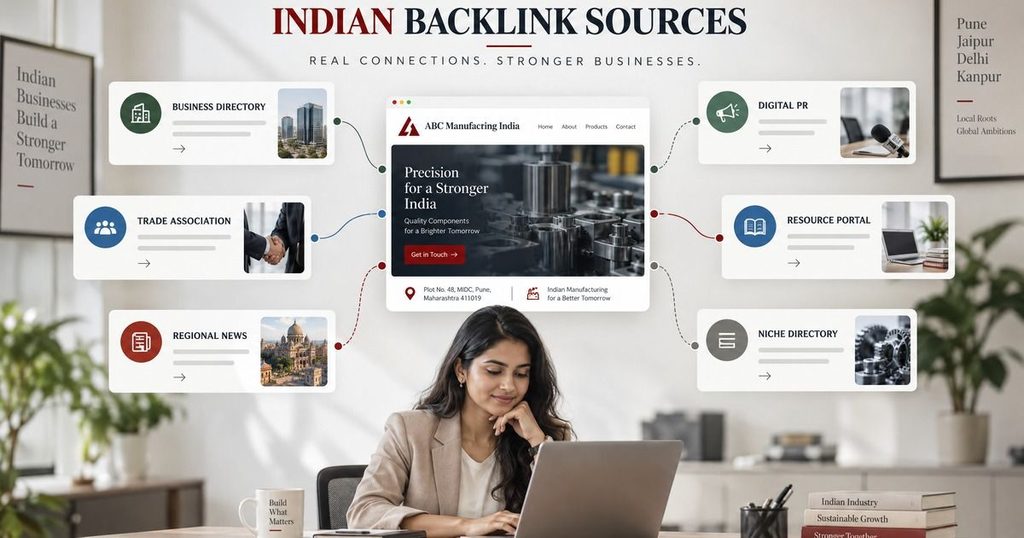
Business directories
Start here. Justdial, IndiaMART, Sulekha, TradeIndia, and Google Business Profile. Free, trusted, and a base layer every Indian business should have. Fill each listing fully and keep your details consistent.
Industry associations & trade bodies
Most industries have an association with a member directory — pharma, chemicals, textiles, leather, logistics. A Kanpur leather exporter we know got listed in a tannery trade portal and an industry body page; referral traffic and rankings both climbed over about three months.
Regional news & digital PR
Local and regional news sites (including .in and Hindi-language ones) give strong, trusted links. Share a genuine story — a new product, a local event, a data finding. A Jaipur jeweller got covered by a Rajasthan news site for a Dhanteras gold-trend piece. One clean press link, lasting value.
.edu.in and .gov.in opportunities
These carry real weight. Think scholarships, student resources, sponsoring a college event, or supplier listings on a government portal. Harder to get, but a single one is worth plenty. Don’t buy these — earn them.
Startup & niche directories
If you’re a startup or SaaS, listings on YourStory-style roundups, startup directories, and product listing sites help. A Pune SaaS firm got picked up by a couple of these after launching a free tool — more on that trick below.
Want to know where your backlinks stand? Media Sathi gives Indian businesses a free backlink audit. We show which links help you, which ones put you at risk, and where to earn stronger ones. No cost, no pressure — just visit mediasathi.com.
Link Building Tactics, Step by Step
Now the how. You don’t need all of these. Pick two or three and do them well.
1. Guest posting
Write a genuinely useful article for a relevant Indian blog, with one natural link back to you. Good: real sites with real readers in your niche. Bad: “guest post networks” selling placements on junk sites. Guest posting in India still works when the site is real.
2. Digital PR
Turn something you know into a story the press wants — survey data, a local trend, an expert comment. Pitch it to journalists and regional outlets. This earns the best links, the kind money can’t safely buy.
3. Broken-link building
Find a dead link on a relevant page (free browser extensions spot these), then offer your working page as the replacement. You’re helping the site owner, so reply rates are decent.
4. Resource pages
Many sites keep a “useful links” or resources page. If your guide or tool fits, ask to be added. Search things like “your topic + resources” or “+ useful links” to find them.
5. HARO-style sourcing
Journalists need expert quotes daily. Platforms that connect sources to reporters (HARO and Indian alternatives) let you earn press links by answering well. Be fast, be specific, be real.
6. Linkable assets
This is the one most owners skip — and it’s the best. Build something people want to link to: a free calculator, original data, a template, a detailed local guide. That Pune SaaS firm’s free GST calculator earned links on its own, with zero outreach. Make the asset, and links come to you.
How Many Links, How Fast, and Tracking
No magic number exists. A handful of strong, relevant links can outrank a site with hundreds of weak ones. Look at the pages ranking above you — that’s your real target.
Pace matters too. A sudden spike of 100 links in a week looks unnatural and risky. Steady beats sudden. A few solid links a month, every month, builds a profile Google trusts.
Track it with free tools. Google Search Console › Links shows who links to you. Check it monthly: are new, good links coming in? Are the pages you care about gaining them? That’s the real scoreboard.
Mistakes That Get Indian Sites Penalised
Steer clear of these and you’ll stay on the safe side of Google :
- Buying bulk links or cheap “SEO packages” promising instant backlinks.
- Using PBNs or link farms built only to pass links.
- Over-using exact-match anchor text like “best packers and movers Delhi.”
- Spamming blog comments, forums, and random directories.
- Swapping links at scale with unrelated sites.
- Chasing foreign spammy guest-post networks for quick numbers.
Here’s our honest take: if a deal promises hundreds of links cheap and fast, it’s the exact thing Google is built to catch. Slow, real links win the long game. Building them the right way is a big part of what we do at Media Sathi for clients across pharma, jewellery, and more.
Let’s build your links the safe way
You now have a full, safe playbook for link building in India. You can run it yourself — start with directories and one linkable asset this month. Or hand the slow, steady work to a team that does it daily.
Two easy ways to start:
- Get a free backlink audit — we’ll show you what’s helping, what’s risky, and where to earn stronger links. Visit mediasathi.com.
- Talk to us — Contact Media Sathi, tell us your site and your goal, and we’ll suggest a safe plan that fits your budget.
Pick the directories first. Earn one real link this week. Small, steady steps are how strong profiles get built.
FAQs :
Q1. What is link building in SEO?
Link building is getting other websites to link to yours. Each quality link acts like a vote of trust that tells Google your site is useful, which helps it rank. The best links come from real, relevant sites — not paid link farms.
Q2. How can I get backlinks for my Indian website?
Start with real directories like Justdial, IndiaMART, and Sulekha. Then earn links through guest posts on Indian blogs, local and regional press, industry association listings, and free tools or data others want to link to.
Q3. Is buying backlinks safe in India?
No. Buying links or using PBNs breaks Google’s spam policies and can get your site penalised. It may work briefly, then wipe out your rankings. Earned, white-hat links are slower but safe and lasting.
Q4. How many backlinks do I need to rank?
There’s no fixed number. A few links from strong, relevant Indian sites beat hundreds of weak ones. Check what the pages ranking above you have, then aim for similar quality. Build steadily, not in bursts.
Q5. How long does link building take to show results?
Usually two to four months to see movement, longer in competitive niches. Links take time to be found and counted by Google. Treat it as a steady habit, not a one-time push.


